
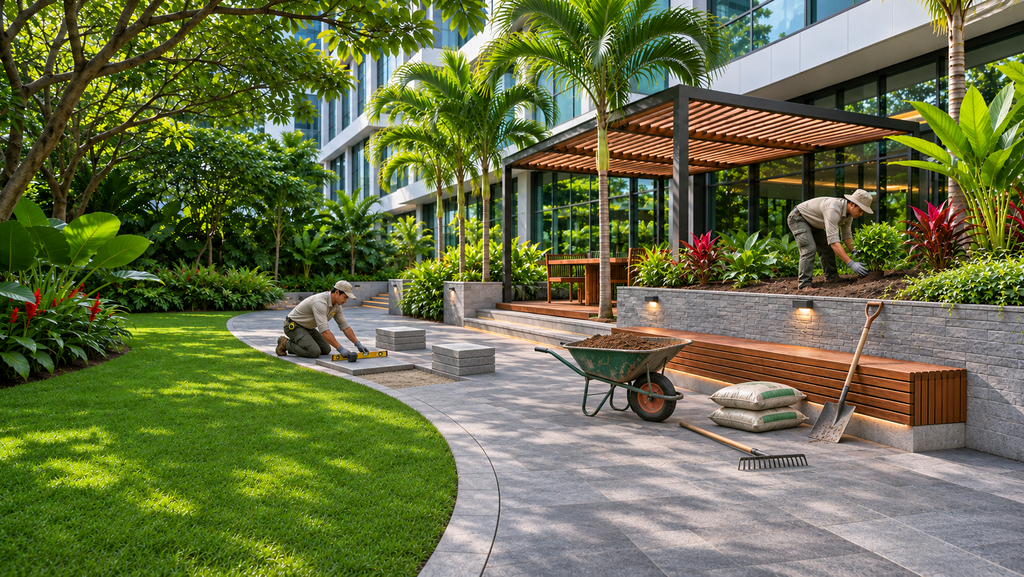
A well-planned landscape brings together plants, pathways, outdoor structures and practical site features to create a cohesive outdoor space. Turning a design into a finished landscape takes careful coordination, suitable materials and skilled installation. Whether you are improving a home garden, office entrance, commercial property or shared outdoor area, an experienced landscape contractor in Singapore can help manage the construction work from site preparation to final planting.
Professional landscape construction services in Singapore can include ground preparation, planting, paving, garden features, drainage coordination, outdoor structures and landscape finishing. The scope depends on the property, approved design and intended use of the space. A clear plan helps ensure that the installed landscape is attractive, practical and suitable for Singapore’s climate.
Landscape Contractor Services for Homes and Businesses
Landscape construction can be carried out at many types of properties, including:
- Landed homes and private gardens
- Condominiums and shared residential spaces
- Office buildings and business parks
- Retail and hospitality properties
- Restaurants, cafés and hotels
- Schools and learning centres
- Industrial properties and warehouses
- Rooftop terraces and courtyards
- Commercial developments and common areas
Each site has different needs. A homeowner may want a garden with a lawn, planting beds and an outdoor seating area. A commercial property manager may need a more formal entrance landscape, clear access routes and planting that can be maintained consistently.
A landscape contractor coordinates the practical work needed to transform a site. This may include preparing the ground, installing hardscape elements, placing plants and completing the details that connect the different areas.
What Landscape Construction Services Can Include
The construction scope should reflect the design, site conditions and project requirements. Depending on the project, landscape construction services in Singapore may cover the following.
Site preparation
Before new landscaping begins, the work area may need to be cleared and prepared. This could involve removing unsuitable vegetation, clearing debris, adjusting planting areas or preparing surfaces for paths and other features.
The preparation stage should take account of existing structures, access routes and services. A site review helps identify what can remain and what needs to be changed before installation.
Groundworks and planting areas
Planting beds and lawn areas may require soil preparation, grading or other groundwork. The approach depends on the existing surface, intended planting and drainage conditions.
Preparing the planting area properly supports the new landscape and helps create a clean transition between garden beds, lawns and paved surfaces. The work should also account for how water moves through the site.
Plant supply and installation
Plant installation may include trees, shrubs, ground cover, flowering plants and other greenery selected for the design. Plants should be placed in suitable locations and with enough room to establish and grow.
The planting plan may include layers of different heights and textures to create depth and structure. The contractor can coordinate plant delivery and installation so that the landscape follows the agreed layout.
Lawn installation
A lawn can provide an open area for recreation, relaxation or visual balance. The type of lawn and installation method should suit the site conditions and intended use. In some locations, ground cover or other surfaces may be more practical than grass.
The site should be prepared to support the chosen lawn and allow for suitable drainage and ongoing care. Edges should be coordinated with nearby paths, planting beds and structures.
Paving and pathways
Paths help people move through a garden or commercial landscape. Paving may also be used for patios, entrance areas, outdoor dining spaces and circulation routes.
Materials should be chosen for the property’s appearance and how the area will be used. The layout should provide practical access while keeping planting zones and building entrances clear. Proper coordination helps paving connect cleanly with existing surfaces and landscape features.
Edging and retaining features
Edging can define garden beds and create a tidy boundary between different surfaces. Retaining features may be needed where the ground level changes or planting areas require support.
The design and construction of these features should suit the site and intended use. Material selection and installation details should be considered before work begins.
Decking and outdoor structures
Some landscape projects include decks, pergolas, screens, trellises, benches or other outdoor structures. These features can create usable zones, provide shade or support climbing plants.
The structure should be planned around the site, access and intended function. Its scale and material should also complement the building and surrounding landscape.
Planters and vertical greenery
Planters can bring greenery to paved spaces, balconies, terraces and building entrances. Vertical planting may be considered where ground space is limited and the site is suitable for the system.
Planters should be placed so that they do not block movement, signage or access. Plant selection, drainage and maintenance access are important considerations.
Landscape lighting and finishing
Lighting can support the use of paths, entrances and seating areas after dark. Finishing work may include completing garden edges, removing construction debris and checking that the landscape looks consistent with the agreed design.
The final review helps identify details that need adjustment before the project is handed over.
Residential Landscape Construction
Home landscape projects are shaped by how residents want to use their outdoor space. Some homeowners want a low-maintenance garden, while others are planning a lawn, outdoor dining area, children’s play space or private retreat.
A residential landscape contractor may help coordinate:
- Garden bed preparation and planting
- Lawn installation
- Pathways and patios
- Planters and garden borders
- Screens and privacy planting
- Decks and outdoor seating
- Lighting and decorative features
- Final garden clean-up
A well-coordinated build considers how residents move between the home and garden. Paths should lead naturally to key areas, while planting should complement the property and leave room for access and care.
For compact gardens, construction needs to be carefully planned so that features do not make the space difficult to use. For larger properties, dividing the garden into zones can help create different areas for relaxing, entertaining and planting.
Commercial Landscape Construction
Commercial landscape work often involves additional coordination. The property may need to remain open to staff, visitors, customers or tenants during the project. Access routes, delivery areas, business hours and site rules may influence the construction schedule.
Commercial landscape construction may involve:
- Building entrances and forecourts
- Office courtyards and shared spaces
- Retail walkways and outdoor areas
- Hotel gardens and arrival zones
- Planting around business premises
- Rooftop and terrace improvements
- Landscape works for common areas
A commercial landscape contractor should coordinate the construction sequence with the property’s operational needs. This can include planning delivery access, protecting nearby surfaces and keeping designated routes usable where possible.
The design should also account for long-term maintenance. Commercial spaces may need planting and materials that remain presentable with a manageable level of care.
Landscape Construction and Singapore’s Conditions
Singapore’s warm, humid climate and frequent rainfall affect landscape construction, plant selection and drainage planning. Ground conditions and exposure can vary across the same property, particularly between sheltered courtyards, open lawns and rooftop areas.
A landscape contractor should consider:
- Existing ground and surface conditions
- Sunlight and shade
- Rainwater flow and drainage
- Soil or planting-bed requirements
- The mature size of plants
- Access for ongoing maintenance
- Weather exposure for materials and structures
Drainage is an important consideration in outdoor construction. Water should be able to move through the site without creating unwanted pooling or affecting nearby areas. Planting beds, paths and paved surfaces should be coordinated with the site’s existing conditions.
Material choices should also suit the location and intended use. A surface that works well in a sheltered garden may not be the best choice for a heavily used outdoor route. Discussing these factors before construction begins can help align the materials with the project.
Our Landscape Construction Process
A clear process helps property owners understand the work and coordinate decisions.
1. Project discussion
The project begins with a discussion about the property, the areas to be improved and the desired outcome. You can share the approved design, preferred materials, priorities, budget range and any site or scheduling requirements.
2. Site review
The work area is reviewed to understand access, existing surfaces, planting conditions and any constraints. This helps confirm what preparation and coordination may be needed.
3. Scope and quotation
A written scope can outline the proposed construction work, materials and installation items. It should clarify which areas are included and identify any project details that need confirmation.
4. Scheduling and site coordination
The work schedule is planned around access and project requirements. For commercial sites, this may involve coordinating with building management or working around operating hours.
5. Construction and installation
The agreed work is carried out in stages. Depending on the project, this may include site preparation, groundworks, hardscape installation, planting and finishing.
6. Review and handover
The finished landscape is reviewed against the agreed scope. The handover can include guidance on watering, plant care and any maintenance requirements relevant to the installation.
How to Choose a Landscape Contractor in Singapore
Choosing a contractor involves more than comparing prices. It is useful to understand the proposed scope, materials, site coordination and how the work will be completed.
Consider asking:
- What construction work is included in the quotation?
- Which materials and plants are included?
- How will the work be sequenced?
- How will access and deliveries be coordinated?
- What preparation is needed before installation?
- How will the site be kept tidy during the project?
- What care will the landscape need after handover?
- How will changes to the agreed scope be handled?
A clear quotation helps you understand what you are paying for and makes it easier to compare proposals. If you already have a landscape design, confirm that the contractor has reviewed the drawings and understands the specified materials and layout.
It is also helpful to discuss timing and any site requirements early. Residential projects may need to coordinate with household access, while commercial work may need to account for tenants, customers and building operations.
Why Construction Coordination Matters
A landscape combines several elements that need to fit together. Paths connect areas, planting beds meet paved surfaces and structures need to sit correctly within the layout. When the work is coordinated, the finished landscape is more likely to feel complete and function as intended.
Construction coordination can help:
- Keep the work aligned with the approved plan
- Coordinate planting with paving and structures
- Identify site issues before they affect later stages
- Plan access for people and equipment
- Manage installation timing
- Prepare for future landscape maintenance
Clear communication between the property owner, designer and contractor can make the construction process easier to manage. If the design or site conditions change, confirm how the change affects the scope, materials and schedule before proceeding.
Build a Landscape That Suits Your Property
A landscape construction project can transform an outdoor area into a more welcoming and useful part of a property. The results depend on a suitable design, appropriate materials and careful installation.
An experienced landscape contractor in Singapore can coordinate the practical work involved in building residential and commercial landscapes. From planting and lawn installation to pathways, decks and garden features, professional landscape construction services in Singapore can help bring a landscape plan to life.
If you are planning a new landscape or upgrading an existing one, begin by identifying the areas that matter most. Consider how the space will be used, what features you need and what level of maintenance you can manage. With a clear scope and coordinated construction plan, your landscape can be built to suit the property and the people who use it.
Frequently Asked Questions
What does a landscape contractor do?
A landscape contractor carries out the practical work needed to install or improve an outdoor space. Depending on the project, this can include site preparation, planting, lawn work, paving, garden structures, planters and landscape finishing.
What are landscape construction services?
Landscape construction services cover the installation and building work involved in creating a landscape. The scope may include groundworks, planting, hardscape elements, outdoor structures, lighting and final site preparation.
Do landscape contractors work on both residential and commercial properties?
Many landscape contractors handle residential and commercial projects. The scope and site coordination requirements vary depending on the property, design and how the space is used.
Can a landscape contractor work from an existing design?
Yes. A contractor can review the design and provide a quotation for the installation work. It is helpful to provide drawings, material specifications and any relevant site requirements.
How long does landscape construction take?
The schedule depends on the size and complexity of the project, materials, site access and weather conditions. A contractor can provide an estimated timeline after reviewing the site and scope.
What should I prepare before requesting a quotation?
Prepare the property address, photographs, approximate measurements and any landscape drawings or reference images. List the areas you want improved and note any access or timing requirements.