
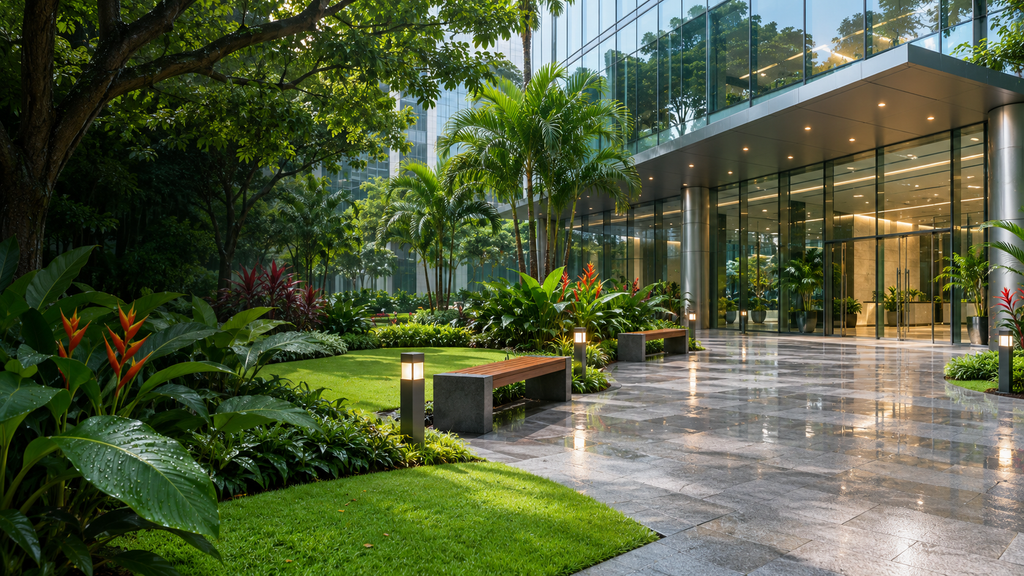
A well-planned landscape can change the way people experience an office or commercial property. Greenery can soften the appearance of a building, make an entrance more welcoming and create outdoor areas where employees, visitors and customers feel comfortable. From a few carefully placed planters to a complete landscape makeover, the right design can help a property look cared for and fit for business.
Professional office landscaping services in Singapore help businesses plan, install and maintain greenery suited to their property. Commercial landscaping may include office entrances, courtyards, rooftop terraces, outdoor seating areas, planter beds and boundary planting. Each site has different requirements, so a landscape plan should reflect the building, how people use the space and the level of upkeep the business can manage.
Whether you manage an office building, retail property, hotel, clinic, restaurant or industrial site, commercial landscaping services can help make your outdoor areas more functional and attractive.
Commercial Landscaping Services for Singapore Businesses
Commercial properties often combine public areas, staff spaces, building facilities and service access. Landscaping needs to work around these practical requirements while supporting the appearance of the property.
A corporate office may need a professional entrance that makes a positive first impression. A retail centre may want greenery that makes walking areas feel more inviting. A hotel may use planting to create a relaxed arrival experience, while an industrial site may need durable landscaping that is straightforward to maintain.
Commercial garden landscaping can be suitable for:
- Office buildings and business parks
- Retail shops and shopping centres
- Hotels and serviced residences
- Restaurants and cafés
- Clinics and healthcare facilities
- Schools and learning centres
- Industrial buildings and warehouses
- Showrooms and corporate campuses
- Mixed-use developments and shared facilities
A suitable design considers how the landscape will be seen and used. For example, planting near an entrance should frame the approach without obstructing access or signage. A staff courtyard may need shade and seating. A rooftop terrace may require a different plant and material plan from a sheltered ground-level garden.
What Office Landscaping Services Can Include
The scope of an office landscaping project depends on the size of the property, existing conditions and business priorities. Some businesses need a refresh of existing planting, while others want a new landscape plan and installation.
Landscape design and planning
A clear landscape plan helps organise planting, pathways, seating and other features. It can also identify how greenery will relate to the building’s architecture, signs and entrances.
Planning may consider:
- The property’s main entrances and visitor routes
- Existing trees, planters and garden beds
- Employee and customer circulation
- Outdoor seating or break areas
- Views from offices and shared spaces
- Access to building services and facilities
- The expected level of maintenance
- The appearance and identity of the business
For larger properties, it can be useful to plan the landscape as a connected whole. Repeating selected plants, materials or design details across different areas can create a consistent appearance from the entrance to the courtyard and outdoor common spaces.
Planting and garden installation
Planting can introduce colour, texture and shade to a commercial property. Depending on the site, this may include trees, shrubs, ground cover and flowering plants. A planting scheme should suit the amount of sunlight, shade, wind and rain exposure in each area.
The scale of the plants also matters. Large plants may create a strong visual feature, but they need sufficient room to grow. Smaller or slower-growing plants may be more practical near walkways and entrances. A professional planting plan considers how the landscape may look as plants mature, not only immediately after installation.
Planters and container gardens
Planters are useful where a property has limited ground space or mostly paved outdoor areas. They can add greenery around entrances, terraces, balconies and seating areas. Containers can also help define different zones within an open space.
Planter size, location and material should suit the building and the intended use of the space. They should not obstruct doorways, walkways, emergency access or building operations. The selected plants also need to fit the planter and receive appropriate care.
Courtyard and outdoor seating areas
A courtyard can provide a shared outdoor space for employees, visitors or customers. Landscaping can help the area feel more comfortable and organised through a combination of planting, seating and clear paths.
A staff area may need a practical layout with places to sit and easy access from the building. A customer-facing courtyard may need a more decorative design that complements the surrounding business. In both cases, plant placement should preserve circulation and provide enough room for people to use the space.
Rooftop and terrace landscaping
Rooftop terraces and upper-level outdoor spaces can become useful amenities when they are planned carefully. Landscaping may include containers, shade planting and seating areas. Before installation, the site should be reviewed for exposure, drainage, access and applicable building requirements.
Rooftop areas can face stronger sun and wind than sheltered ground-level gardens. The planting and materials should suit these conditions, and the layout should allow for ongoing maintenance. Access routes and building facilities should remain clear.
Pathways, borders and hardscape features
Paths help visitors and staff move through outdoor areas. Borders can distinguish planting beds from paved surfaces and give the garden a tidy appearance. Other hardscape elements may include paving, edging and seating features.
The materials and layout should be suitable for the property and its daily use. High-traffic routes need a durable, clear surface, while planting areas should remain accessible for maintenance. A coordinated plan can help hardscape and planting feel like parts of the same design.
Office plants and indoor greenery
Office landscaping may also include greenery indoors. Plants in reception areas, meeting rooms and shared spaces can add a natural element to the workplace. The choice and placement should take account of available light, air-conditioning, foot traffic and the amount of care required.
Indoor greenery needs regular attention to remain presentable. A maintenance arrangement can help businesses manage watering, pruning, cleaning and replacement of plants when needed.
Landscape lighting
Outdoor lighting can help entrances, paths and seating areas remain usable after dark. It may also highlight selected trees or planting features. Lighting should be planned for the way the property operates, with attention to pedestrian movement and the overall appearance of the building.
Commercial Garden Landscaping for Singapore’s Climate
Singapore’s warm, humid climate and regular rainfall influence plant growth and landscape maintenance. Conditions can differ across one property: a shaded courtyard may receive limited direct sunlight, while a rooftop terrace can be exposed to strong sun and wind.
A site assessment can help identify these differences. It may review:
- Sunlight and shade throughout the day
- Rain and wind exposure
- Drainage and areas where water collects
- Existing soil and planting conditions
- Foot traffic and vehicle access
- Space available for plant growth
- Access for watering, pruning and maintenance
Plant selection should suit the location where each plant will be installed. Plants in exposed areas may need different conditions from those in sheltered spots. The design should also account for how plants grow over time so that paths, signage and building features remain clear.
Create a Welcoming Office Entrance
The entrance is one of the most visible areas of an office or commercial property. A tidy, well-designed landscape can make the arrival experience feel more welcoming and help reinforce a professional image.
Planting can frame a building entrance, soften hard surfaces and create a visual link between the building and its surroundings. A restrained selection of plants may suit a corporate office, while a retail or hospitality property may use a more colourful or layered planting scheme.
Entrance landscaping must keep doors, signs, drop-off points and walkways accessible. Plants should be positioned so they do not obstruct views or create unnecessary obstacles for visitors. A good plan considers how the entrance looks from the street, from the approach and from inside the building.
Landscaping for Retail, Hospitality and Customer-Facing Properties
For businesses that welcome customers, landscaping can form part of the overall experience. A restaurant may need greenery around outdoor dining areas. A hotel may want planting that creates a calm approach to the lobby. A retail property may use planters to add colour while keeping shopfronts and signs visible.
The design should support how the business operates. Planting near dining areas should be easy to manage and should not interfere with tables or circulation. Retail landscapes should keep entrances and storefronts visible. Hotel landscapes may need to remain presentable throughout the day because guests encounter them at different times.
Commercial garden landscaping services can help businesses coordinate plants, pathways, seating and maintenance around these needs. The design can be adjusted to suit the property’s character and the impression the business wants to create.
Landscaping for Industrial and Business Properties
Industrial sites and business parks may have large outdoor areas that need a practical landscape plan. Planting can improve the appearance of boundaries, staff entrances and shared areas without interfering with vehicles, loading zones or building access.
These sites may benefit from robust planting and straightforward layouts. Maintenance requirements should be considered from the start, especially where the landscape covers a large area. Trees, shrubs and garden beds should be positioned with sightlines, vehicle movement and site operations in mind.
Commercial Landscape Maintenance
Ongoing maintenance helps a commercial landscape stay neat and healthy. The maintenance schedule depends on the types of plants, property size, visibility and use of the area.
Commercial landscape maintenance may include:
- Pruning and trimming
- Weeding and clearing leaves
- Watering and checking plant condition
- Maintaining planting beds and planters
- Replacing damaged or unsuitable plants
- Keeping paths and garden edges tidy
- General upkeep of outdoor areas
High-visibility areas, such as entrances and customer-facing spaces, may need more frequent attention than less prominent parts of the property. A maintenance plan can be tailored to the site and the business’s operating schedule.
Regular care also helps identify issues before they become more difficult to manage. Plants may need pruning as they grow, while containers and planting beds may require seasonal attention. A clear maintenance arrangement helps businesses keep the property looking consistent.
Our Commercial Landscaping Process
A straightforward process helps businesses understand the proposed work and coordinate it with building operations.
1. Initial discussion
The project begins with a conversation about the property, the areas to improve and the desired outcome. Businesses can share how the space is used, who visits it and any operating requirements that may affect the work schedule.
2. Site assessment
The site is reviewed to understand its layout, planting conditions, access routes and existing features. This helps identify suitable locations for plants and practical constraints that the plan needs to address.
3. Landscape proposal
A proposal can outline the recommended scope of work. Depending on the project, it may include design, planting, planters, pathways, seating, lighting and ongoing maintenance.
4. Plant and material selection
Plants and materials are selected to suit the site, design and maintenance expectations. Businesses can discuss alternatives based on appearance, durability, budget and care requirements.
5. Installation planning
The installation schedule is coordinated with site access and business operations. The plan may need to account for pedestrian routes, delivery arrangements and the timing of work around peak activity.
6. Installation and handover
The agreed landscaping work is carried out, followed by a review of the finished areas. Care guidance can help the business understand the routine attention needed to maintain the landscape.
7. Ongoing maintenance
Businesses can arrange regular maintenance according to the size and requirements of the property. The schedule can be reviewed as plants establish and the landscape changes over time.
Choosing Commercial Landscaping Services in Singapore
When comparing providers, look for a proposal that reflects your actual property rather than a generic plan. The provider should understand the site’s use, access requirements and maintenance expectations.
Questions to consider include:
- Which areas of the property are included in the work?
- How will the design support the way staff and visitors use the site?
- Which plants are suitable for each area’s light and exposure?
- How will access for maintenance and building operations be preserved?
- What work is included in the installation scope?
- What ongoing maintenance will be required?
- How will the design look as the plants grow?
It is also useful to discuss work timing, site access and how work areas will be managed while installation is in progress. Clear communication can help the landscaping work fit more smoothly around the business.
Make Your Commercial Property Greener and More Inviting
A well-planned landscape can improve the appearance and use of an office or commercial property. It can create a more welcoming entrance, bring greenery to a courtyard, support outdoor seating or make a customer-facing space feel more inviting.
Professional office landscaping services in Singapore can help businesses plan these improvements around the building, the people who use it and the care the landscape will need. From refreshing a few planters to redesigning a larger outdoor area, a considered approach can connect planting, pathways and shared spaces into a cohesive environment.
If you are considering commercial landscaping services, begin by identifying the areas that matter most. Think about the impression you want to create, how employees and visitors move through the site, and what level of maintenance is practical. A clear brief can help shape a landscape that suits your property and supports its everyday use.
Frequently Asked Questions
What do office landscaping services include?
Office landscaping services may include landscape planning, planting, planters, courtyard and rooftop gardens, outdoor seating, paths, lighting and ongoing maintenance. The scope depends on the property and the areas the business wants to improve.
Can landscaping be carried out while an office is operating?
Work can often be scheduled around business operations, depending on the project and site conditions. Access, noise, deliveries and pedestrian routes should be discussed during planning.
How often does commercial landscaping need maintenance?
The schedule depends on the planting, site size, visibility and level of use. Entrance gardens and customer-facing areas may need more frequent attention than less visible spaces.
Can a small office entrance benefit from commercial landscaping?
Yes. A small entrance can be improved with well-sized planters, suitable planting and a clear layout. The design should preserve access, signage visibility and movement around the entrance.
What is included in commercial garden landscaping services?
Commercial garden landscaping services may include design, plant selection, garden installation, planters, paths, outdoor features and maintenance. The exact scope should be confirmed in a project proposal.
How do I start a commercial landscaping project?
Start by identifying the areas you want to improve, how the space is used and what maintenance level is practical. A site discussion and assessment can then help determine a suitable scope and plan.